CHRONIC PAIN CHAMPIONS
  • Home
  • Start Here
  • Understand Pain
  • Accept Pain
  • Change Your Experience
  • Chronic Pain Resources
  • Community
  • About

Chronic Pain Blog

Explore thoughts, experiences, and evidence-informed perspectives on chronic pain, pain science, pain rehabilitation, self-management, and living well despite persistent pain.

PACING ISN’T AN EXCUSE TO AVOID ACTIVITY

5/28/2022

 
Updated September 4, 2026

People with chronic pain often fall into a "boom and bust" cycle.

On a good day, we may try to catch up on everything we've been unable to do.

We overdo it.

Pain or other symptoms increase.

Then we spend the next day — or several days — doing very little while we recover.

Eventually we feel better, try to catch up again, and the cycle repeats.

Pacing can help break that cycle

What is pacing?
Activity pacing is a way to balance activity and rest so we can participate more consistently in the things that matter to us.

It may include:
  • Breaking larger tasks into smaller pieces
  • Alternating more demanding and less demanding activities
  • Taking planned, short breaks
  • Slowing down when appropriate
  • Setting reasonable time or activity goals
  • Gradually increasing activity as our capacity improves

Use pacing to move forward
The goal of pacing shouldn't be to create a smaller and smaller life.

It should be to help establish a consistent and sustainable level of activity.
Once that level becomes manageable, we may be able to gradually increase what we do.

For example, instead of walking until pain forces us to stop, we might set a manageable walking goal and practice it consistently.

Over time, if that becomes easier, we can consider increasing the distance or duration.

The same principle can apply to household chores, hobbies, exercise, social activities, or other meaningful activities.

Pacing isn't the same as avoidance
Chronic pain can cause us to become protective of ourselves.

Pain is a warning signal, so it's understandable to avoid activities we believe will worsen it or cause further damage.

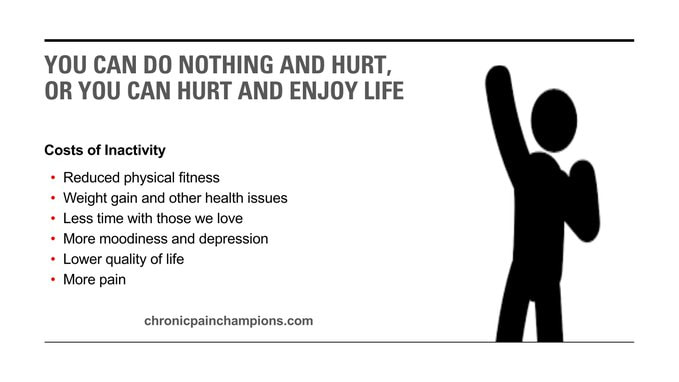
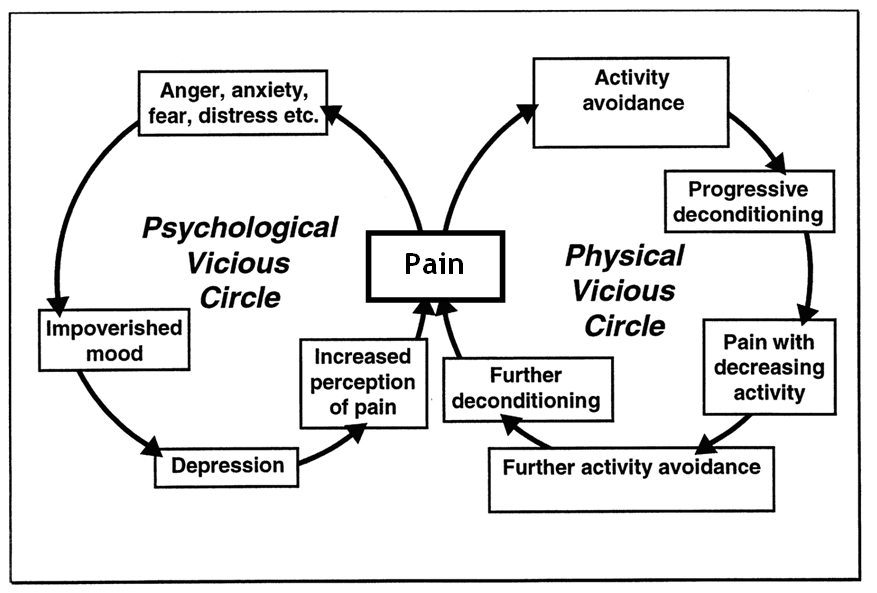
But avoiding activity because of fear of pain can gradually make life smaller.

We may stop exercising.

Spend less time with friends.

Give up hobbies.

Avoid work or household activities.

Or stop doing things we enjoy.

Research has consistently found associations between activity avoidance and greater disability, pain, and psychological distress in people with chronic pain. These findings don't prove that avoidance causes those outcomes, but they do highlight the importance of avoiding unnecessary restriction of activity

Ask yourself: Am I pacing so I can keep participating, or so I can avoid activity?

That question can help distinguish pacing from avoidance.

Pain doesn't always mean stop
An increase in pain doesn't automatically mean that an activity has caused damage.

For some people with chronic pain, movement or activity can be uncomfortable without being harmful.

That doesn't mean we should ignore severe pain, new symptoms, or signs of injury. Nor does it mean we should push through everything.

Instead, it means we can learn to distinguish between "This is uncomfortable" and "This is unsafe."

That distinction can make it easier to stay active.

The goal is progress, not perfection.

Find your sustainable level
There isn't one pacing formula that works for everyone.

Your starting point depends on your current abilities, symptoms, goals, health, and circumstances.

Start with something manageable.

Be consistent.

Then, when appropriate, gradually challenge yourself to do a little more.

You don't have to wait until the pain disappears before you begin increasing activity.

At the same time, you don't have to force yourself through every increase in pain.

The goal is to find the balance between protecting yourself and challenging yourself
.
Keep moving forward
Pacing can be a valuable self-management tool when it helps break the boom-and-bust cycle and maintain consistent participation in meaningful activities.

Respect your limits. Take breaks when you need them. Modify activities when necessary.

But also look for opportunities to expand what you can do.

The evidence for pacing itself is still developing, and different pacing approaches may work differently for different people. A 2026 systematic review found that pacing interventions tended to improve function, but results for pain and fatigue were mixed, and confidence in the evidence was very low.

That uncertainty doesn't mean pacing is useless.

It means we should use it thoughtfully and focus on the outcomes that matter most.

The bottom line
Pacing isn't about avoiding activity. It's about finding a sustainable way to stay involved in life.

Don't let a bad day convince you that you can't do anything at all.

Don't let a good day convince you that you can do everything.

Find a manageable starting point and stay consistent. And when you're ready, gradually move forward.

The goal of pacing isn't to make life smaller.

It's to make participation in life more sustainable.

Learn more and do more
  • Activity pacing: moving beyond taking breaks and slowing down
  • The role of avoidance, pacing, and other activity patterns in chronic pain
  • Activity Pacing
  • Pacing and Goal Setting
  • Tools for recovery – Boom or bust vs pacing
  • Pacing For Pain
  • Chronic pain self-management: Pacing and goal setting
  • Goal Setting for Pain Rehabilitation​
  • Pacing – how to manage your pain and stay active
  • What Goals Have You Set Recently? 
  • Effect of Pain Reprocessing Therapy vs Placebo and Usual Care for Patients With Chronic Back Pain
  • Activity Pacing is Associated With Better and Worse Symptoms for Patients With Long-term Conditions​

what goals have you set recently?

3/12/2022

 
Chronic pain can make it easy to feel overwhelmed, reduce our activity levels, and become isolated.  Goals help restore a sense of order, build self-efficacy and sense of control, improve mood, and provide direction by helping with planning daily activities.
 
One of the tools we learned at the Mayo Clinic Pain Rehabilitation Center was goal setting to help us plan our days and keep us on track. We set goals each day. They didn't have to be massive, but they had to be SMART - specific, measurable, achievable, relevant, and time-bound.
​
  • Specific – What do you want to do?  What action will you take?
  • Measurable – How will you track progress and know when you’ve reached the finish line.
  • Achievable – Is it something you can do? Do you have the necessary skills and resources?
  • Relevant – Why is it important to you?
  • Time-bound – When do you want to accomplish it?

Some SMART goal examples:
  • Increase my step count by end of week to 5,000 steps a day.
  • Do deep breathing for three minutes three times each day for the next week.
  • Read three articles about cognitive behavioral therapy by end of the week.
  • Plan a social event to visit in-person with friends and family this week.
  • Lose 4 to 8 pounds of weight in the next 30 days.
  • Volunteer 10 hours a week at the community center for the next month.
 
Did you notice none of the goal examples included pain reduction?
Our focus should be on reducing stress, improving our quality of life and increasing functional ability and activity, not pain reduction. Focusing on pain reduction is an easy trap to fall into - leading to frustration and depression.  Just as the homepage of my website says - we can live well, despite the pain. 

Celebrate!
While it's natural to celebrate big goals, be sure to celebrate milestones along the way, as well as smaller victories. These celebrations keep us motivated along the way and help instill confidence.

Resource
  • Goal Setting for Pain Rehabilitation​
Proudly powered by Weebly
  • Home
  • Start Here
  • Understand Pain
  • Accept Pain
  • Change Your Experience
  • Chronic Pain Resources
  • Community
  • About