CHRONIC PAIN CHAMPIONS
  • Home
  • Start Here
  • Chronic Pain Resources
  • Community
  • About
  • About Chronic Pain Champions
  • Chronic Pain Blog | Pain Science & Self-Management | Chronic Pain Champions
  • Understand Pain
  • Accept Pain
  • Change Your Experience
  • Pain Rehabilitation
  • Family and Friends
  • Chronic Pain Support Groups
  • Artcles & Interviews
  • Healthcare Professionals
  • Chronic Pain Champions Support Group
  • Chronic Pain Self-Management Course | Chronic Pain Champions
  • What People Are Saying
  • Connect
  • Communication & Listening
  • Pain Science & Chronic Pain
  • Person Centered Chronic Pain Care
  • Pain Communication
  • Active Self-Management in Pain Care
  • FAQs
  • Chronic Pain Self-Management Tools | Chronic Pain Champions
  • Pain Rehabilitation for Chronic Pain
  • Find a Chronic Pain Rehabilitation Program
  • Trapped by Chronic Pain? Break Free and Take Back Your Life
  • Free Chronic Pain Starter Guide | Chronic Pain Champions
  • Self-Management Tools (old)

Chronic Pain Blog

Explore thoughts, experiences, and evidence-informed perspectives on chronic pain, pain science, pain rehabilitation, self-management, and living well despite persistent pain.

Don't count spoons...Recharge!

5/29/2022

 
(Updated 5/16/25)

INSTEAD OF STARTING YOUR DAY WITH A LIMITED NUMBER OF SPOONS, YOU HAVE THE ABILITY TO SELF-CHARGE THROUGHOUT THE DAY TO BOOST ENERGY AND IMPROVE MOOD.
​

Christine Miserandino's spoon theory has become popular with people with chronic pain to explain their pain and plan their days so they don't over-extend themselves..

The theory assumes people with chronic pain have only so much emotional and physical energy each day to do the things they want to do. You start each day with a finite number of spoons. Each spoon represents a unit of energy. As you use up your energy, you take a spoon away. 

The problem with the theory: there isn't a way to add more spoons (energy) or to make each spoon last longer than expected.

Therefore, it can be self-limiting — focusing on what we can't do instead of what we can, leading us to avoid activities that could make us feel worse but may very well help by giving us more energy and improving our mood. For instance, we may choose to save spoons by skipping lunch with friends or by going on a much-needed walk.

Recent research demonstrated that on mornings when patients catastrophized more than usual about their pain in the day ahead, they spent more time in sedentary behavior and engaged in fewer minutes of moderate-to-vigorous physical activity that day. Cross-day lagged analyses further showed that the effect of morning pain catastrophizing on subsequent sedentary behavior extended to the next day. More time spent in sedentary behavior, in turn, contributed to greater pain catastrophizing the next morning" (Zhaoyang et al 2020). 

Another idea: Think of your day like a car's battery system.

If you don't use a car, or leave the car's lights or radio on without the engine running, the car battery will eventually run out of energy. But if you drive the car, the alternator will recharge the battery.
​
Just like a car's battery system, we can add more energy to our days by doing things like:
  • Changing how we think about pain to not be so afraid of it and minimize the suffering.
  • Incorporating activities like deep breathing, tai chi, mindfulness, yoga, and muscle relaxation.
  • Playing games and doing hobbies.
  • Laughing - Watch a funny movie or TV show and give yourself permission to be silly.
  • Getting outside for a walk and enjoying nature.
  • Listening to music: Music has an analgesic effect that helps us feel better.
  • Modifying and moderating activities to make things easier, not harder.
  • Spending time with people who don't drain our energy with pain talk, negativity, and complaints.
  • Being grateful - Focusing on what you have, not what you've lost.

Note: This is just another tool to add to your chronic pain toolbox. If the spoon theory or another approach works for you, please continue using it. 

PACING ISN’T AN EXCUSE TO AVOID ACTIVITY AND PAIN

5/28/2022

 
People with chronic pain often do too much when they're having good days and not enough when they're having bad days.

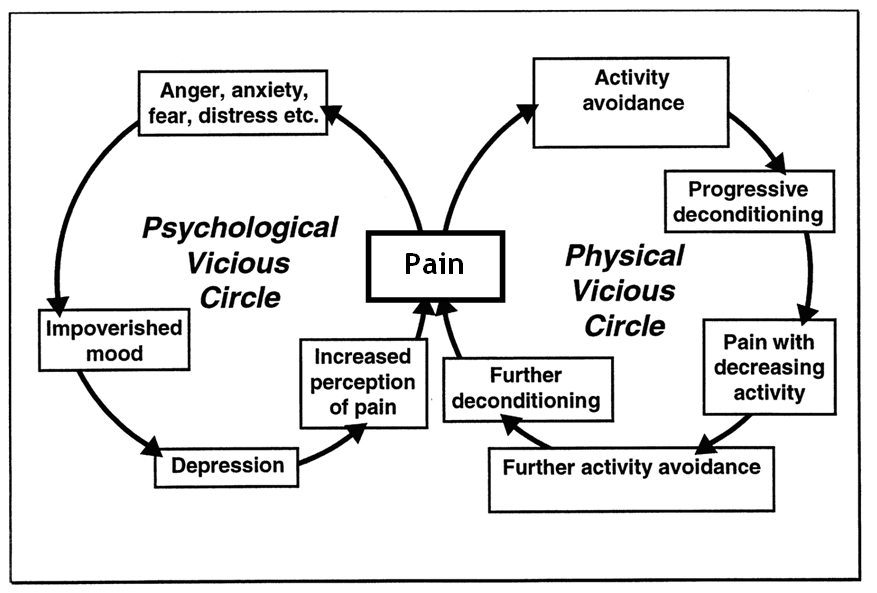
Chronic pain can cause us to overprotect ourselves. Our natural reaction to pain is to avoid activities that worsen our discomfort or increase our perceived risk of further damage. When we become overly fearful and stop doing things in anticipation of pain, we can make things worse.

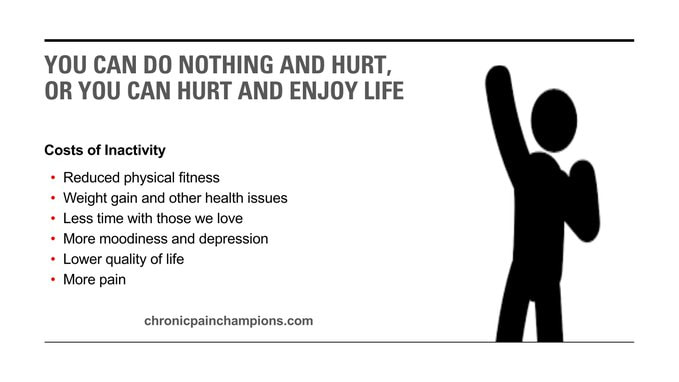
Inactivity reduces our functional ability and decreases our strength and stamina. It also prevents us from getting involved in the social, leisure, and work activities we enjoy.
 
Pacing/moderation has become a helpful tool for people living with chronic pain to help provide them with balance. It includes setting time limits, slowing down (start low, go slow), breaking up tasks, and taking frequent short breaks.
 
But be careful not to let pacing become an excuse for not being active or avoiding pain. Doing so can intensify the pain, worsen symptoms, and reduce physical stamina.

Pacing should instead be used to gradually increase what we can do, despite the pain. Stay consistent with your activity. 
 
The difference is in the goal and execution. Keep moving forward.
 
Learn more and do more
  • Activity pacing: moving beyond taking breaks and slowing down
  • The role of avoidance, pacing, and other activity patterns in chronic pain
  • Activity Pacing
  • Pacing and Goal Setting
  • Tools for recovery – Boom or bust vs pacing
  • Pacing For Pain
  • Chronic pain self-management: Pacing and goal setting
  • Goal Setting for Pain Rehabilitation​
  • Pacing – how to manage your pain and stay active
  • What Goals Have You Set Recently? 
  • Effect of Pain Reprocessing Therapy vs Placebo and Usual Care for Patients With Chronic Back Pain
  • Activity Pacing is Associated With Better and Worse Symptoms for Patients With Long-term Conditions​
Picture
Picture
Cooper, Booker and Spanswick, 2003

    Topic

    All
    Cognitive Behavioral Therapy
    Featured Resource
    Forgiveness/Gratitude
    General
    Goal Setting
    Moderation/pacing
    Opioids
    Pain Behavior
    Pain Management
    Pain Rehabilitation
    Supplements
    Understand Pain

    ​Archives

    August 2026
    July 2026
    September 2025
    June 2025
    April 2025
    July 2024
    June 2024
    October 2023
    September 2023
    August 2023
    April 2023
    January 2023
    November 2022
    August 2022
    July 2022
    June 2022
    May 2022
    April 2022
    March 2022
    February 2022
    January 2022

    CHRONIC PAIN CHAMPIONS, LLC, AND THIS WEBSITE DO NOT PROVIDE MEDICAL ADVICE

    All information is for educational purposes only. It is not intended to replace professional medical advice, diagnosis, or treatment. Use at your own risk.
    ​

    By accessing/using this website and any related pages/information/products/services, you agree to the terms and conditions.

    ​© 2026 Chronic Pain Champions, LLC
    ​All rights reserved.
    For personal, non-commercial use..
Proudly powered by Weebly
  • Home
  • Start Here
  • Chronic Pain Resources
  • Community
  • About
  • About Chronic Pain Champions
  • Chronic Pain Blog | Pain Science & Self-Management | Chronic Pain Champions
  • Understand Pain
  • Accept Pain
  • Change Your Experience
  • Pain Rehabilitation
  • Family and Friends
  • Chronic Pain Support Groups
  • Artcles & Interviews
  • Healthcare Professionals
  • Chronic Pain Champions Support Group
  • Chronic Pain Self-Management Course | Chronic Pain Champions
  • What People Are Saying
  • Connect
  • Communication & Listening
  • Pain Science & Chronic Pain
  • Person Centered Chronic Pain Care
  • Pain Communication
  • Active Self-Management in Pain Care
  • FAQs
  • Chronic Pain Self-Management Tools | Chronic Pain Champions
  • Pain Rehabilitation for Chronic Pain
  • Find a Chronic Pain Rehabilitation Program
  • Trapped by Chronic Pain? Break Free and Take Back Your Life
  • Free Chronic Pain Starter Guide | Chronic Pain Champions
  • Self-Management Tools (old)