CHRONIC PAIN CHAMPIONS
  • Home
  • Start Here
  • Understand Pain
  • Accept Pain
  • Change Your Experience
  • Chronic Pain Resources
  • Community
  • About

Chronic Pain Blog

Explore thoughts, experiences, and evidence-informed perspectives on chronic pain, pain science, pain rehabilitation, self-management, and living well despite persistent pain.

cognitive behavioral therapy for pain

6/5/2022

 
Updated September 4, 2026

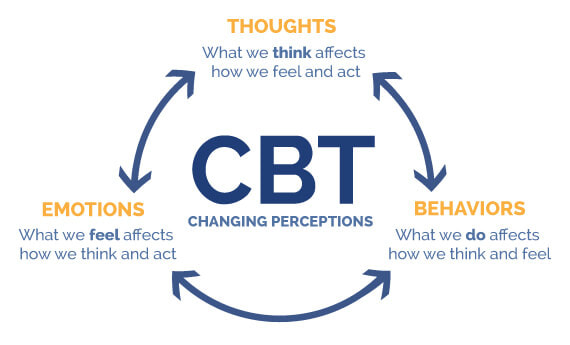
Our thoughts, emotions, and behaviors can influence how we experience and respond to pain.

Cognitive Behavioral Therapy (CBT) is a form of psychological treatment that can help people identify unhelpful thoughts and behaviors, develop more effective coping strategies, and become more active in managing chronic pain.

CBT doesn't mean that pain is "all in your head."

The pain is real.

Instead, CBT recognizes that pain is a complex biopsychosocial experience and that the way we think, feel, and behave can influence how we respond to pain and how much it affects our lives.

How can CBT help?
CBT is based on the idea that thoughts, emotions, behaviors, and pain can influence one another.

When living with chronic pain, it's easy to become caught in unhelpful patterns.

You may begin thinking:
  • "I'll never get better."
  • "Activity will make the pain worse."
  • "I can't do that because of the pain."
  • "Something must be seriously wrong.

​Those thoughts can affect emotions and behavior. They may contribute to fear, avoidance, inactivity, frustration, or loss of confidence.
CBT can help identify these patterns and develop more helpful ways of thinking and responding.

The goal isn't to think just positively. It's about thinking more accurately and responding more effectively.

CBT is about skills
CBT can provide practical skills that you can continue using long after you've learned them.

These may include:
  • Identifying and challenging unhelpful thoughts
  • Reframing unhelpful thinking patterns
  • Developing more balanced expectations
  • Learning strategies for managing difficult emotions
  • Gradually returning to meaningful activities
  • Reducing fear and avoidance
  • Improving problem-solving skills
  • Developing more effective coping strategies
  • Building confidence in your ability to manage pain
  • Practicing active self-management

These skills can help change the role pain plays in your life.

CBT isn't about eliminating every unpleasant thought or emotion.

It's about learning that thoughts are not always facts and that emotions don't have to determine what you do.

CBT and self-management
One of the things I value most about CBT is that it gives people tools they can use themselves.

A therapist may teach you the skills, help you identify patterns, and provide guidance as you practice them. Over time, however, those skills can become part of your own self-management toolkit.

That's important because chronic pain doesn't disappear when an appointment ends.

You need strategies that you can use at home, at work, with family, and while doing the activities that matter to you. CBT can be one part of that toolkit.

It isn't a cure for pain
CBT isn't a magical cure for chronic pain.

It doesn't mean pain is imaginary, and it doesn't guarantee it will disappear.

The goal is broader than pain reduction.

CBT can help people change how they respond to pain, reduce the impact of unhelpful thoughts and behaviors, improve coping and confidence, and work toward greater function and quality of life.

Research supports CBT and other psychological approaches as useful components of chronic pain management, although the size of benefit varies among conditions and individuals.

My experience
I learned CBT while attending the three-week interdisciplinary Mayo Clinic Pain Rehabilitation Center.

It changed my pain experience and my life by giving me practical tools to:
  • Accept the pain and live more in the present
  • Identify, challenge, and change unhelpful thoughts and behaviors
  • Become more active in self-managing chronic pain
  • Focus more on what I can do rather than what I cannot
  • Build confidence in my ability to manage difficult situations

CBT didn't make my chronic pain disappear.

It helped me change my relationship with pain and how I responded to it.

That distinction was important.

Find a therapist trained in CBT for chronic pain
It can be difficult to find a psychologist or other mental health professional with specific training and experience in CBT for chronic pain.

When looking for a therapist, ask about their experience working with people who have chronic pain and how they approach treatment. You may also want to ask how they incorporate pain education, cognitive restructuring, activity, goal setting, and self-management into their work.

 You can find search tools here:
  • American Association of Pain Psychology — search for a pain psychologist
  • Psychology Today — therapist directory
  • Chronic Pain Champions —  Information about pain rehabilitation with links to programs

Learn more and do more
  • What is CBT? 
  • Cognitive Behavioral Therapy for Chronic Pain 
  • A Magical Cure for Pain? No — it's just Cognitive Behavioral Therapy
  • Managing Chronic Pain: A Cognitive-Behavioral Therapy Approach
  • Reframing unhelpful thoughts 
  • How to use CBT thought records to change the way you feel
  • How to recognize and tame your cognitive distortions
  • Replacement Thought Examples
  • The Pain Management Workbook 
Picture
Image courtesy of McGovern Medical School

Comments are closed.
Proudly powered by Weebly
  • Home
  • Start Here
  • Understand Pain
  • Accept Pain
  • Change Your Experience
  • Chronic Pain Resources
  • Community
  • About